
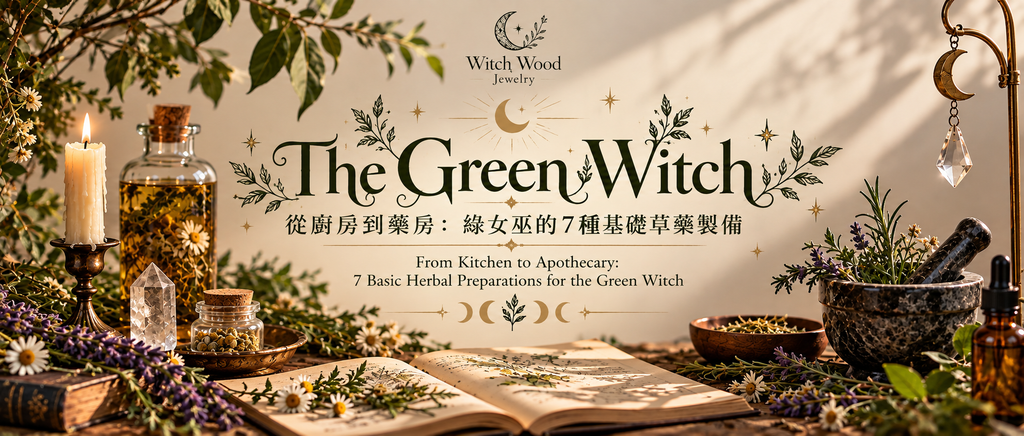
For many people, the entry point into herbalism is not the garden. It is the kitchen.
That half-forgotten jar of dried mint in the cupboard. The bottle of apple cider vinegar pushed to the back of a drawer. The lemon left over from cooking. None of these seem to have anything to do with “herbal preparation,” yet they are already the starting point. The core logic of herbal preparation is not complicated: use a medium to extract the active components from a plant and preserve them. The medium can be water, oil, vinegar, alcohol, or even honey. Different mediums extract different compounds and correspond to different uses.
This article covers seven of the most basic herbal preparation methods. They require no professional equipment, no separate workspace, and can be done in an ordinary kitchen.
1. Infusion: The Gentlest Extraction
Infusion is the simplest method, suited to soft, easily extracted plant parts like leaves and flowers. It is essentially tea, but more concentrated and with a wider range of uses—not just drinking, but also sprays, washes, and compresses.
Method: Place a handful of dried or fresh herbs in a heatproof container. Pour freshly boiled water over them. Cover with a lid and let steep for ten to fifteen minutes. Keeping the lid on matters, because many active compounds are volatile and will escape with the steam if left open. Then strain, pressing the plant material to recover the last of the liquid.
Infusions are best used the same day. If you need to store them, pour into an ice cube tray and freeze. Take out a cube when needed.
Plants suited to infusion: mint, chamomile, lavender, rosemary, rose, calendula.
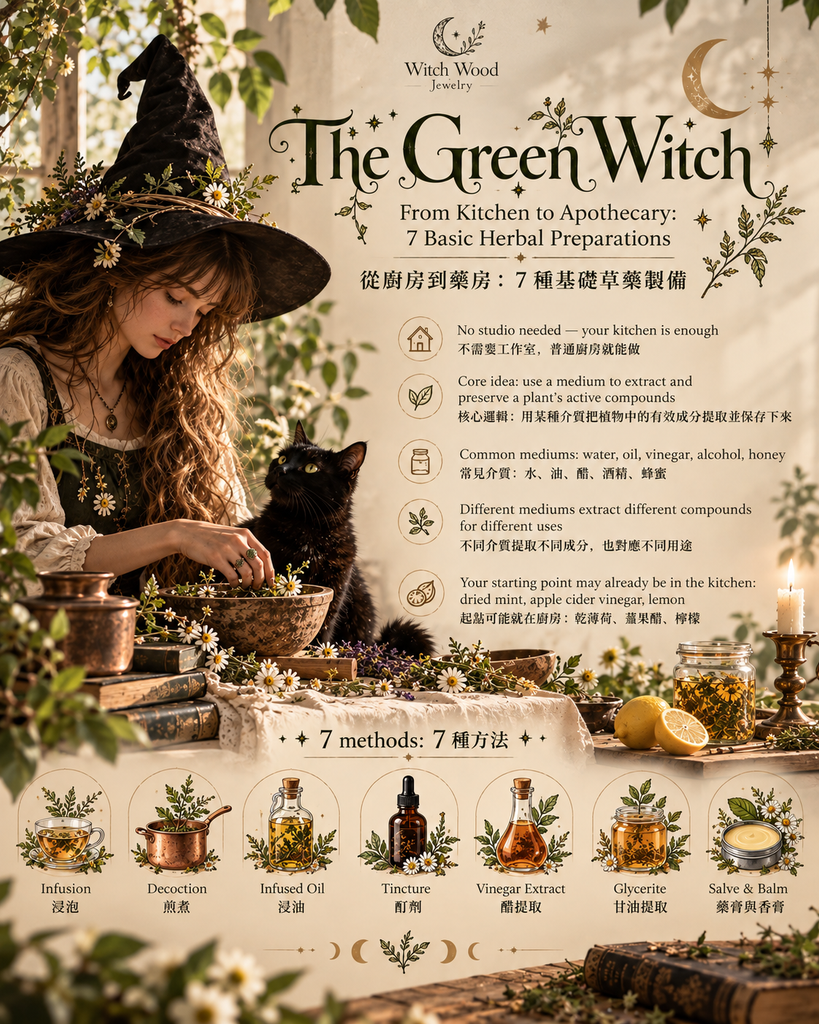
2. Decoction: For Hard Plant Parts
Roots, bark, seeds, and nuts are too dense to give up their compounds in a simple steep. They need to be boiled.
Method: Place the material in a pot, add cold water, bring to a boil, then reduce to a low simmer. Cover and simmer for fifteen to thirty minutes. Turn off the heat and let it sit for another ten minutes, then strain.
Decoctions are more concentrated than infusions and keep slightly longer. They can also be frozen. They tend to be darker in color and stronger in taste, and are used both internally and externally.
Plants suited to decoction: ginger, cinnamon, licorice, dandelion root, astragalus.
3. Infused Oil: Carrying the Plant’s Energy into Oil
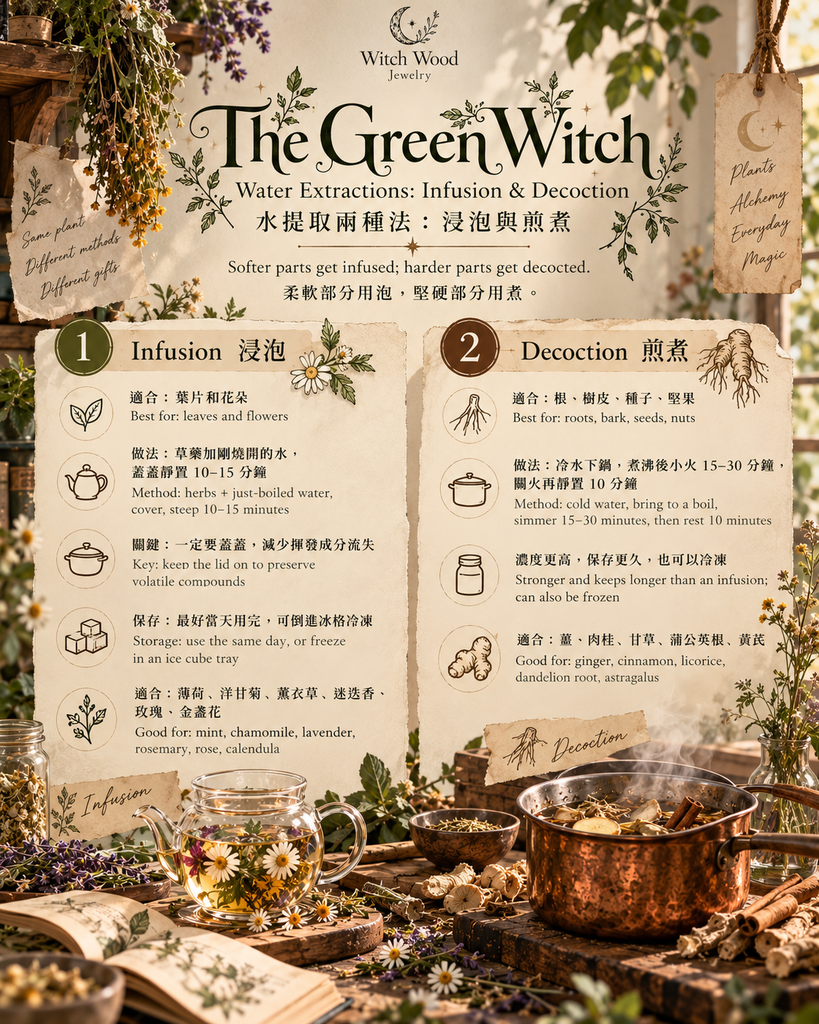
Infused oil uses fat as the medium to extract the oil-soluble components of a plant. The resulting oil can be used directly for massage or skincare, or as a base for salves and balms.
There are two approaches. Cold infusion: Place dried plant material in a glass jar, cover with jojoba, sweet almond, or olive oil, making sure the plant is fully submerged. Cap the jar and leave it in a cool, dark place for two to four weeks, shaking daily. Then strain, squeeze the plant material dry, and bottle. Hot infusion: Place the plant and oil in a heatproof container and warm gently over a water bath for one to two hours. Keep the temperature low—do not let it smoke. Then strain and bottle.
The key point: always use fully dried plant material. Fresh plants contain water, which will cause the oil to mold and spoil. If you only have fresh plants, let them wilt for a day or two until surface moisture has evaporated.
Plants suited to infused oil: calendula, St. John’s wort, lavender, rosemary, rose.
4. Tincture: Alcohol Extraction, the Longest-Lasting
A tincture uses alcohol as the medium. Its advantages are high extraction efficiency and long shelf life—stored properly, it can last for years, whereas dried herbs typically lose potency within one to three years.
Method: Place dried or fresh plant material in a glass jar and cover with alcohol. A common ratio is 1:5 (one part plant to five parts alcohol), but this can be adjusted depending on the density of the plant. Alcohol concentration is generally between 40% and 60%. Vodka is the most commonly used base because its flavor is neutral. Cap the jar and let it steep in a cool, dark place for four to six weeks, shaking daily. Then strain through cheesecloth, pressing firmly on the plant material, and pour the liquid into a dark glass bottle. Label it.
Tinctures are usually not drunk straight. A few drops are added to water or tea. For external use, dilute before applying.
Plants suited to tincture: echinacea, ginger, rosemary, chamomile, hawthorn.
5. Vinegar Extract: Made in the Kitchen
Vinegar is a mild solvent, particularly good at extracting minerals from plants. Apple cider vinegar is the most common base because it has health properties of its own.
Method: Place dried or fresh plant material in a glass jar and cover with apple cider vinegar, making sure the plant is fully submerged. Cap the jar—but note that vinegar corrodes metal lids, so place a layer of plastic wrap or parchment paper between the lid and the jar opening. Let it steep in a cool, dark place for two to four weeks, shaking daily. Then strain and bottle.
Vinegar extracts can be added directly to salad dressings, soups, and stews, or diluted for external use. The taste is milder than a tincture, making it suitable for those sensitive to alcohol.
Plants suited to vinegar extract: nettle, dandelion, rosemary, sage, ginger.
6. Glycerite: For Children and Sensitive Individuals
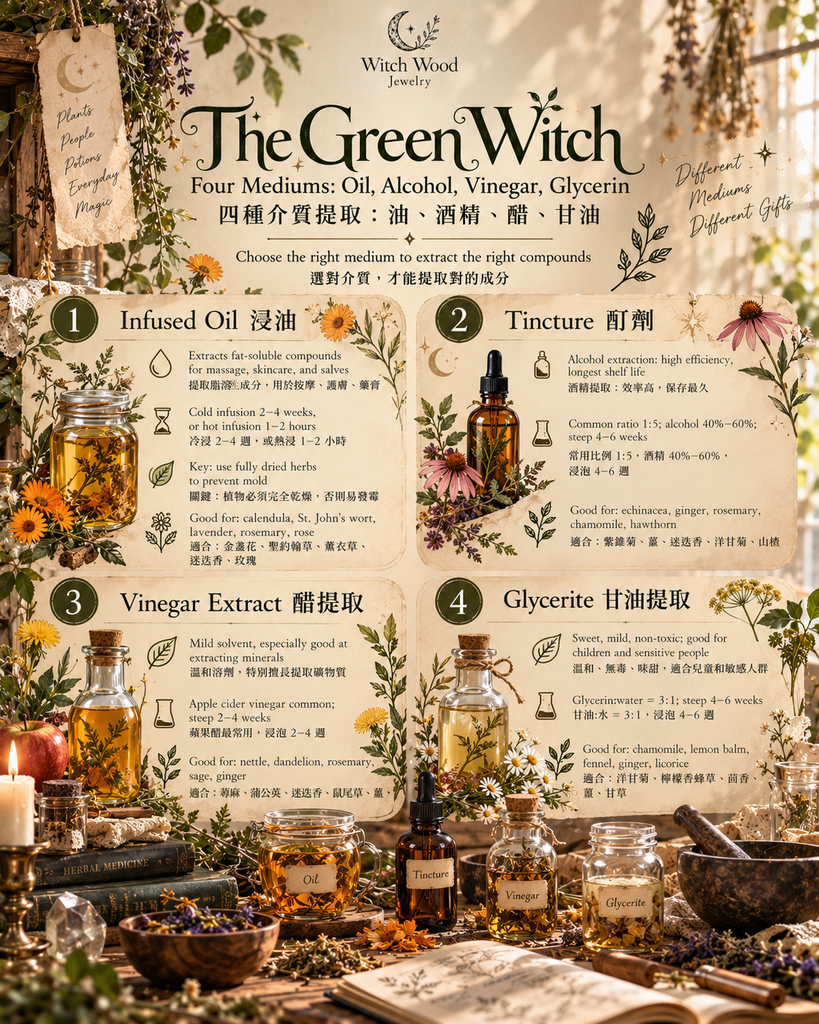
Glycerin is a sweet, viscous liquid. Its extraction power is weaker than alcohol, but it is gentle, non-toxic, and pleasant-tasting. Glycerites are particularly suitable for children, the elderly, pregnant women, or anyone sensitive to alcohol.
Method: Place dried plant material in a glass jar and cover with a mixture of glycerin and water (a common ratio is 3:1 glycerin to water, though pure glycerin also works with slightly lower efficiency). Cap the jar and let it steep in a cool, dark place for four to six weeks, shaking daily. Then strain and bottle.
Glycerites can be taken directly or added to tea or juice. They keep longer than infusions but not as long as tinctures.
Plants suited to glycerite: chamomile, lemon balm, fennel, ginger, licorice.
7. Salve and Balm: Turning Liquid into Solid
Salves and balms are made by adding beeswax to infused oil to solidify it. Salves typically have a lower proportion of beeswax and a softer texture. Balms have a higher proportion and are firmer, suitable for carrying in a tin.
Method: Take one part infused oil and add beeswax. A general ratio is 10 to 15 grams of beeswax per 100 milliliters of oil for a salve, or 20 to 25 grams for a balm. Warm gently over a water bath, stirring until the beeswax is fully melted. To test the consistency, drop a small amount onto a cold plate. If too soft, add more wax. If too hard, add more oil. Once satisfied, pour into containers and let cool and set.
Salves and balms are primarily for external use: apply to the skin, massage into joints, soothe dryness or discomfort. They can also be made into magical balms with a specific intention.
Oils suited to salve-making: calendula, St. John’s wort, lavender, ginger.
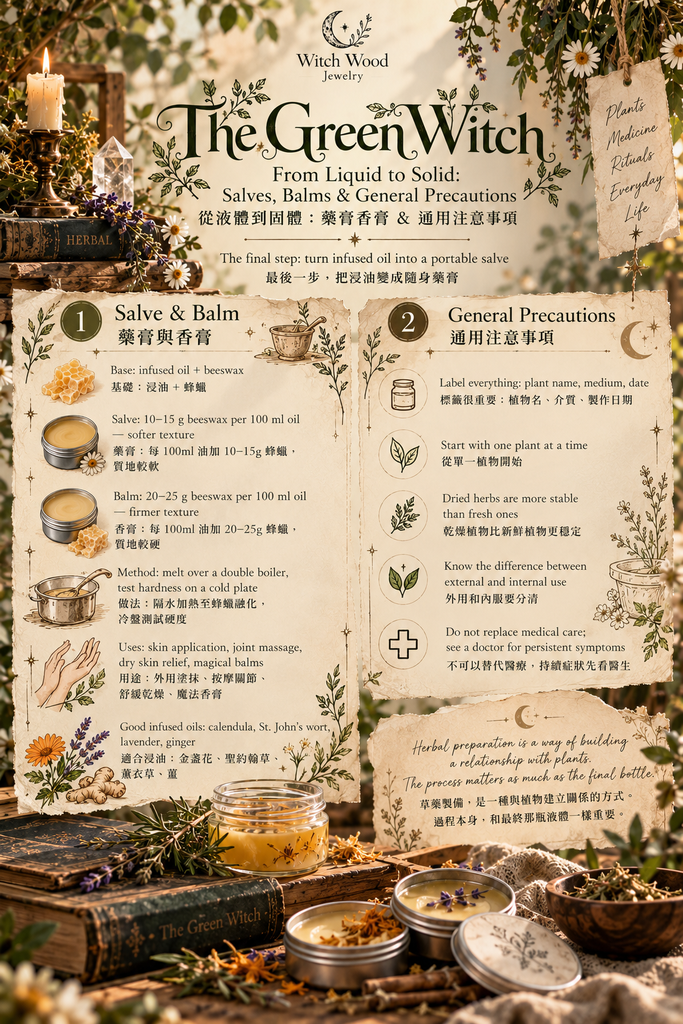
Some General Precautions
Labeling matters. For every batch, write down the plant name, the medium, and the date. Months later, you will not remember what that brown liquid in the bottle actually is.
Start with a single plant. For your first attempts, work with one plant at a time. This way you learn each plant’s individual effect and scent, giving you a basis for judgment when you later begin blending.
Dried plants are more stable than fresh. With few exceptions, most preparation methods work better with dried plant material. Moisture is the primary cause of spoilage.
Distinguish external from internal use. Some plants are safe externally but toxic when ingested. If unsure, keep it external only.
Do not replace medical care. These preparations are for daily wellness and supportive care. They are not a substitute for a doctor’s diagnosis or prescription. If symptoms persist, see a doctor first.
Herbal preparation, in the end, is a way of building a relationship with plants. You spend time learning about a plant, working with it, watching it change in your hands. The process itself has value, as much as the bottle of liquid that comes out of it.
References
- Murphy-Hiscock, A. (2006). The way of the green witch: Rituals, spells, and practices to bring you back to nature. Provenance Press.
- Cunningham, S. (2000). Cunningham’s encyclopedia of magical herbs (2nd ed.). Llewellyn Publications.
- Green, M. (2002). Wild witchcraft: A guide to natural, herbal and earth magic. Thorsons.
- Beyerl, P. (1998). A compendium of herbal magick. Phoenix Publishing.
- Cowan, E. (1995). Plant spirit medicine. Swan, Raven & Company.

