
If you’re new to crystals, walking into a shop filled with sparkling stones can feel overwhelming. Amethyst, clear quartz, rose quartz, obsidian, tiger’s eye — so many names, colors, and claimed benefits. Where do you even start?
The truth is, getting started isn’t that complicated. From over 30 common healing crystals, this guide picks out six that are most suitable for beginners, helping you quickly understand what they look like, which chakras they correspond to, and their basic uses. You don’t need to memorize a long list. Just get to know these six — and you’re already “in.”

1. Clear Quartz
What it looks like: Transparent or translucent crystals, like clean glass or ice.
Corresponding chakras: All chakras, especially the crown and third eye.
Clear quartz is called the “master healer” for good reason. Its defining quality is versatility. Whether you want to meditate, amplify intentions, cleanse a space, or pair it with other crystals, clear quartz handles it all. Its energy is neutral and balanced, suitable for any situation and any person. If you’re only going to buy one crystal, clear quartz is the safest choice.

2. Amethyst
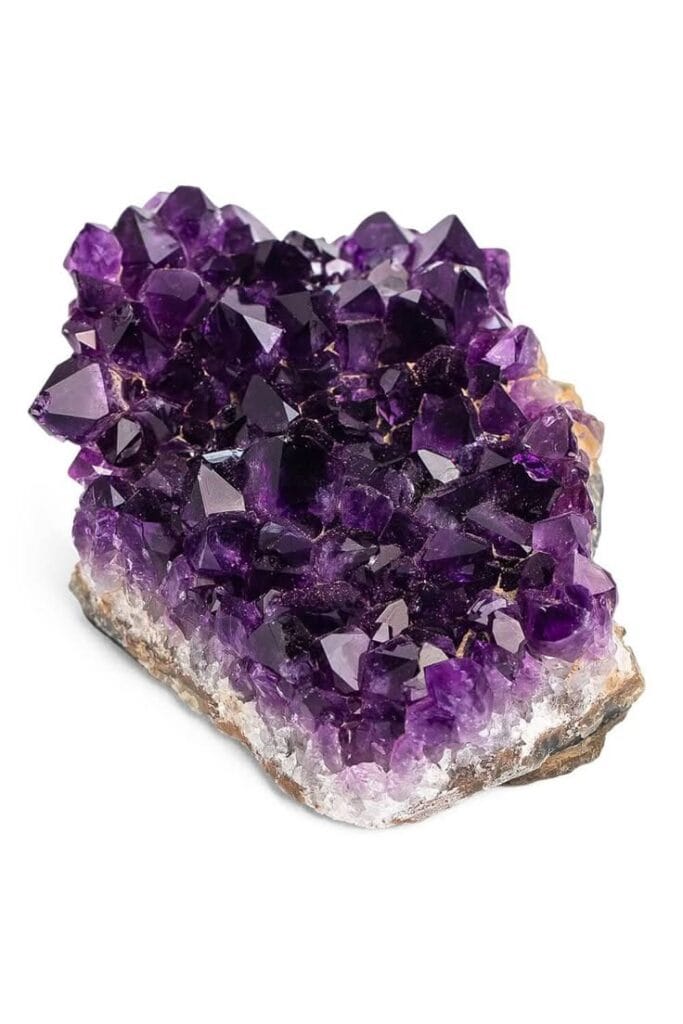
What it looks like: Purple, ranging from pale lavender to deep violet, often found in natural pointed clusters.
Corresponding chakras: Crown and third eye.
Amethyst is probably one of the most well-known healing crystals. Its name comes from the ancient Greek word amethystos, meaning “not intoxicated” — the Greeks carved it into drinking cups, believing it would keep them sober. While modern use isn’t about “sobering up,” amethyst is widely appreciated for helping with sleep, reducing anxiety, enhancing intuition, and deepening meditation. If you struggle with sleep or need to quiet your mind, amethyst is a great choice.
3. Rose Quartz
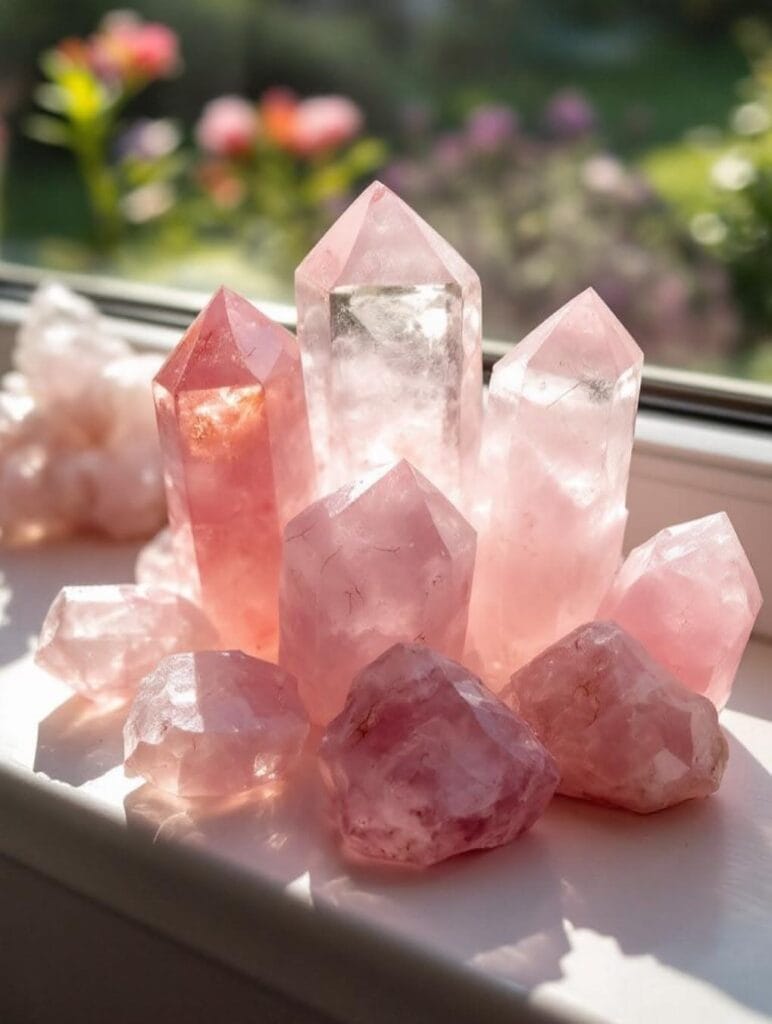
What it looks like: Pink, usually translucent or opaque, with a soft, gentle appearance.
Corresponding chakras: Heart chakra.
Rose quartz is known as the “love stone,” but it’s not just about romantic love. It’s more like an “emotional soother” — helping you let down your guard, accept yourself, and forgive others. When you’re going through emotional ups and downs, loss, or self-doubt, rose quartz offers a gentle energy. It doesn’t force you to “cheer up” — it slowly helps you open your heart.
4. Obsidian
What it looks like: Black, glossy, smooth like glass. Snowflake obsidian has white “snowflake” spots on it.
Corresponding chakras: Root chakra and Earth star chakra.
Obsidian is not technically a mineral crystal — it’s natural volcanic glass formed when lava cools rapidly. But precisely because of its origins, it plays a unique role in healing: protection. Obsidian is believed to “reflect” the parts of yourself you’d rather not face, bringing hidden emotions and habits to the surface. That may sound intense, but its purpose is protective — only by seeing can you heal. If you tend to absorb negative energy from your surroundings, or if you’re working through deep emotional issues, obsidian is a supportive companion.

5. Tiger’s Eye
What it looks like: Golden and brown bands that shimmer and reflect light when you turn it.
Corresponding chakras: Solar plexus, sacral, root, and Earth star.
The color of tiger’s eye alone carries a sense of grounded confidence. It is often used to boost self-confidence, willpower, and practical action. If you’re facing an important decision or need the courage to take a certain step, tiger’s eye helps you “stand firm.” It is not about floating ideas — it’s about taking grounded, real-world action.

6. Selenite
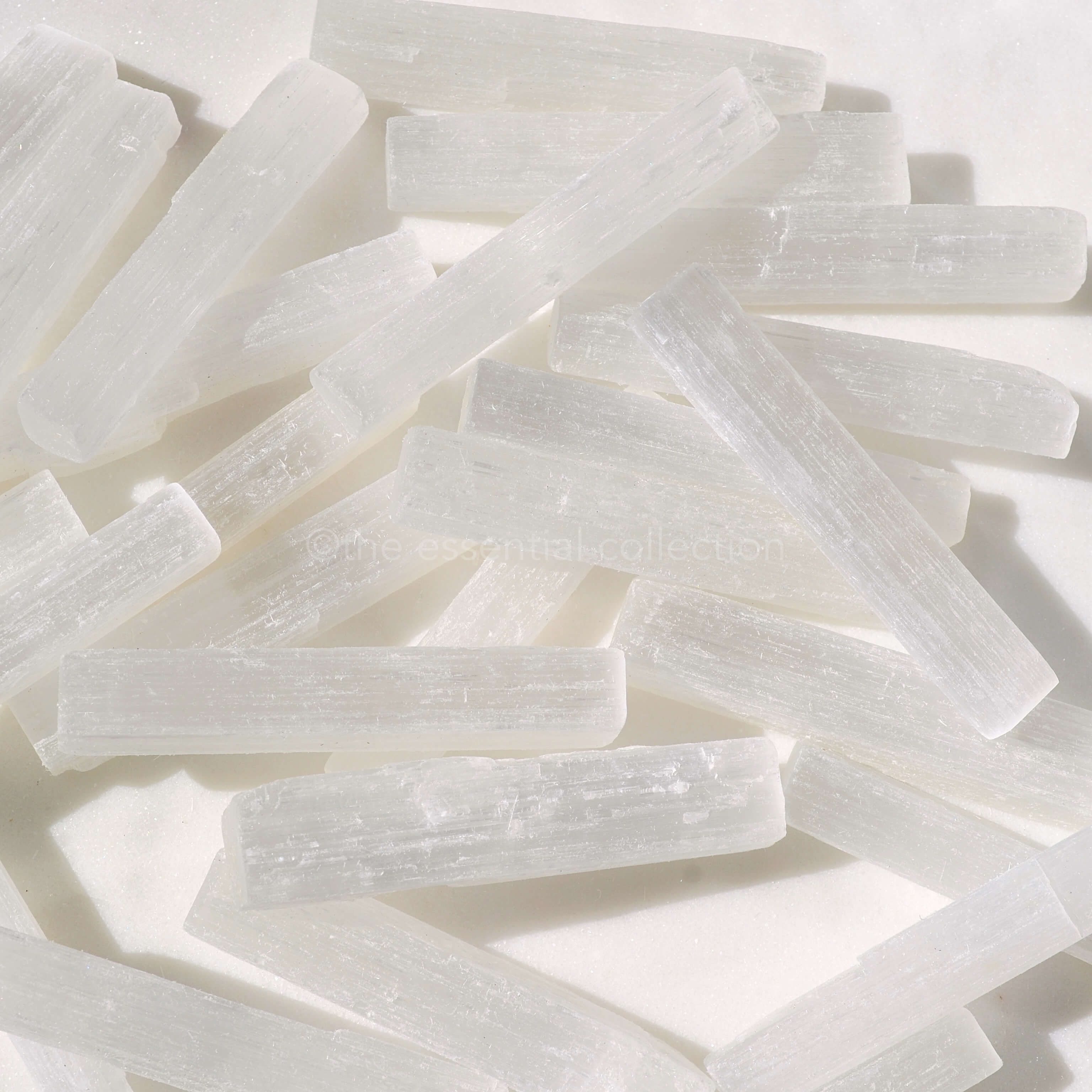
What it looks like: White, translucent, with a glossy luster, often found in rod or plate shapes — as if “moonlight had frozen into ice.”
Corresponding chakras: High crown and crown chakras.
What makes selenite special is its lightness. Physically, it is soft and easily scratched, but energetically, it is very light and high-frequency. It is commonly used to clear spatial energy, connect to higher consciousness, and deepen meditation. If you are sensitive to environmental energy or need an “energy purifier,” selenite is a practical tool. One more thing about selenite: it doesn’t need frequent cleansing, as it is believed to cleanse itself.
Tips
These six crystals cover the most common needs in crystal healing: all-purpose use, sleep, emotions, protection, action, and purification. You don’t need to buy them all at once. Start with the one that draws you most. When choosing, don’t overthink whether it’s “right” — trust your first instinct. It’s usually the most accurate.
Starting with something you wear every day is the easiest way in — our hand-strung crystal bracelets are knotted by hand and sized to your wrist. If you would rather hold the stone than wear it, the raw mineral specimens are single pieces, one of each.
Reference
- Mantello, K. (2026). 30 popular healing crystals. In 30 popular healing crystals (pp. 2–12). Evolve Healing Institute.

