
Throughout human history, trees have played a role that extends far beyond their physical presence in the natural landscape. From the World Tree of Norse mythology to the sacred groves of Druidic tradition, trees have been revered as sacred bridges connecting the earth and the sky, the living and the departed. In modern shamanic practice, the spiritual function of trees has been further systematized: they are understood not only as vessels of life energy but also as conduits linking human lineage with ancestral wisdom. This article systematically explores the central role of trees in shamanic healing, the mechanisms through which they connect with ancestral spirits, and the practical methods for using trees to heal familial trauma.

Trees: Energetic Gateways Between the Three Worlds
In the shamanic cosmological framework, the universe is divided into three spiritual realms—the Lower World, the Middle World, and the Upper World. The entity that connects these realms is the tree. Its roots penetrate deep into the earth, linking to the Lower World—the domain of power animals and ancestral wisdom. Its trunk stands upon the earth, existing within the Middle World—the realm of the physical plane and nature spirits. Its branches stretch upward toward the sky, reaching the Upper World—the abode of angels, ascended masters, and high spiritual guides.
In shamanic practice, therefore, a tree is not merely a plant; it is a natural portal to the spiritual realms. During altered states of consciousness, shamans frequently enter the spiritual realms through the trunk or roots of a tree to retrieve healing energy and wisdom. This intermediary function establishes the tree as a fundamental link between human beings, the spirit world, and the lineage of ancestors.

The Storage of Ancestral Wisdom: Trees and Familial Memory
Trees are capable of connecting individuals with their ancestors not only because their roots reach into the underworld, but also because trees themselves serve as repositories of memory. When an individual passes from the physical world, their body returns to the earth, while their life wisdom, emotional imprints, and spiritual memories are absorbed into the soil and preserved by the roots of the trees deeply embedded in that land. To the ancients, therefore, trees were natural archives of ancestral wisdom.
This means that when an individual sits beneath an old tree and establishes a connection with it, they are not simply conversing with a living organism; they are resonating with the memory field of an entire land and a continuous bloodline. Trees can transmit ancestral messages and guidance, helping descendants understand unspoken wounds within the family, unresolved karma, and forgotten love and wisdom.
For this reason, many traditional cultures regard the roots of trees as entrances to the ancestral world, while the trees themselves are believed to carry the memories of seven generations of ancestors. This belief is not merely ritualistic custom; it is a systematic spiritual understanding—that the relationship between a person and their ancestors must be maintained and restored, or else negative familial energies will continue to repeat themselves across generations like an unbroken shadow.

Familial Trauma and Intergenerational Transmission: The Target of Tree Healing
Familial trauma refers to the collective wounds transmitted from one generation to the next when the painful experiences of earlier generations—such as war, displacement, parental separation, family secrets, or emotional neglect—remain unresolved at the conscious level and pass unconsciously to descendants. These wounds often embed themselves within family narratives, emotional response patterns, and even physical symptoms, causing descendants to unconsciously repeat the suffering of their forebears.
Tree healing is a deep therapeutic approach specifically designed to address this intergenerational trauma. Through deep connection with a tree, an individual can enter the energetic field of their ancestors and access the suppressed and forgotten memories of their lineage. In this process, the individual does not simply review history but seeks to understand, from a higher awareness, the difficulties their ancestors faced, seeing them not as abstract heroes or villains but as human beings with fears, limitations, and struggles.
When this understanding is established, the individual has the opportunity to release negative emotions tied to their family line—resentment, shame, guilt, or unheard pain. These emotions are often the very roots of an individual’s “entanglement” with family destiny. Through the guidance of the tree, the individual can reinterpret the meaning of familial trauma: it is no longer an inevitable fate to be repeated, but a life experience that can be understood, released, and transformed.
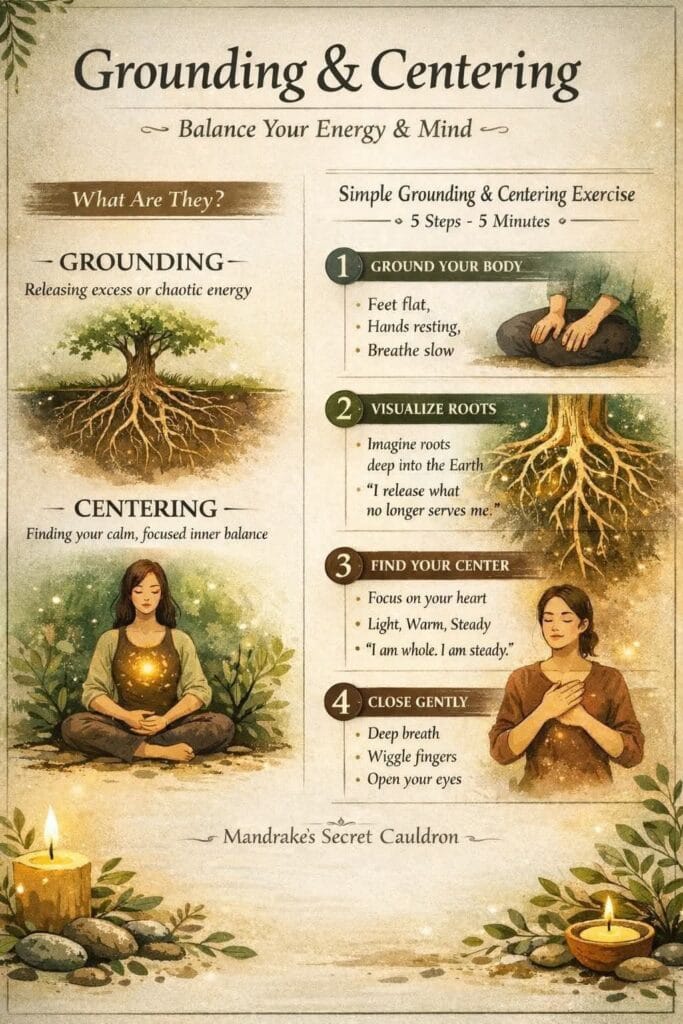
Practical Application: How to Connect with Ancestral Wisdom Through Trees
Tree healing is a simple yet sincere process, the core of which lies in establishing connection rather than performing technical operations. The basic steps are as follows:
1. Choose a tree with which you feel a connection. The tree need not be ancient or imposing, but it should be one toward which the individual feels a sense of affinity or a subtle call.
2. Establish an initial connection. Approach the tree with an attitude of gratitude, gently touch its bark, and allow your breathing to resonate with its rhythm. Do not force the experience; simply exist in the space, allowing connection to arise naturally.
3. State your intention clearly. In your mind or in a soft voice, express your intention clearly, such as: “I wish to connect with my ancestors, to understand their pain, and to receive the wisdom they have left behind.”
4. Open your perception. Maintain a receptive but non-compulsive awareness and listen for any messages the tree may convey. These messages may appear in the form of images, emotions, words, or bodily sensations. Avoid analyzing them too quickly; first, allow them to be received.
5. Express gratitude and give an offering. After the connection is complete, express thanks in some form—a gentle touch on the bark, a word of gratitude, or a small natural token left behind (such as a strand of hair or a small stone). This offering marks the completion of the healing process and honors the spirit of nature.
The Extension of Healing: From the Individual to the Bloodline
It is important to note that ancestral healing through trees does not affect only the individual; it also ripples through the larger energetic field of the family line. Each time an individual reconciles with an ancestor, a trauma node within the lineage is “unlocked,” thereby lightening the burden on the entire family energy system. This ripple effect continues to spread through the bloodline over time, blessing future descendants.
On this path of returning to the lineage, the tree is not merely a silent listener; it is an eternal witness and mediator. It stands outside of time, connecting all living beings with their forebears. Its presence reminds humanity that every pain deserves to be seen and every love deserves to be transmitted. Returning to the bloodline is not about replaying the past; it is about bringing ancient wisdom into a new beginning of life.
References
- Charman, R. (2023). Crystal shamanism: Sacred earth medicine healings. Rockpool Publishing.
- Chevallier, A. (2020). The encyclopedia of herbal medicine. DK Publishing.
- Linn, D. (2011). The sacred tree: A guide to earth-centered spirituality. Hay House.

