Ace of Swords

- Core Themes: Success, decisions, new beginnings, clear thinking
- Symbols & Correspondences: Air element; Air signs (Gemini, Libra, Aquarius); Kabbalistic position: Kether (divine light)
- Upright Meaning: Predicts new beginnings, decisions, and clear thinking, usually related to work and love. Heralds action, drama, and sometimes confrontation. Mental agility and assertiveness will bring success. In relationships, indicates triumph over past obstacles. One Ace sets the theme of a reading; two Aces indicate an important partnership; three Aces mean good news; four Aces signify excitement, beginnings, and potential.
- Reversed Meaning: Conflict and arguments; may become involved in a hurtful battle of wills. May predict a contest you cannot win, at least at present. Lack of confidence in intellectual abilities, or a decision going against you (failing a test or interview).
Two of Swords

- Core Themes: Time to think, stalemate, avoidance, difficult choices
- Symbols & Correspondences: Air element; Moon in Libra; Kabbalistic position: Chockmah (wisdom)
- Upright Meaning: Thinking time before a decision. A situation has reached a stalemate; view this period as a truce or a rest before further negotiation. The tendency is to protect yourself and not take action. Commonly shows employment issues or time out in relationships. Support comes from friends and colleagues.
- Reversed Meaning: Deception and being blind to someone’s manipulation. Applies particularly to partnerships (love, friendships, business). If your intuition tells you someone is dishonest, pay attention and investigate. There is an opportunity to act, but timing is sensitive; do not delay.
Three of Swords

- Core Themes: Sorrow, heartbreak, pain, truth revealed
- Symbols & Correspondences: Air element; Saturn in Libra; Kabbalistic position: Binah (understanding)
- Upright Meaning: The pain of truth. Clouds of doubt clear away, and you can do nothing but face reality. A common card for relationship betrayal, affairs, or disloyalty in work relationships and business dealings. Positively, you get right to the heart of the matter; confusion is banished, and you can begin to heal and move forward. In health, may relate to heart issues needing attention.
- Reversed Meaning: Upset accompanied by quarrels and drama. Despite the upheaval, feelings are expressed, and some confusion and pain are shared and released. This gives a more positive meaning than the upright card. Those around you will understand your need to vent.
Four of Swords

- Core Themes: Rest, passivity, quiet time, recovery
- Symbols & Correspondences: Air element; Jupiter in Libra; Kabbalistic position: Chesed (love)
- Upright Meaning: Offers welcome rest – an opportunity to recover from stress and betrayal. The knight has temporarily laid down his tools and is at rest, safe from attack. In the warring suit of Swords, this card denotes ceasefire. Give yourself time to recharge and heal.
- Reversed Meaning: Insufficient rest, ongoing anxiety, inability to truly relax. Exhaustion from stress; need to actively seek recovery rather than wait passively. A warning about long-term neglect of self-care.
Five of Swords

- Core Themes: Conflict, defeat, selfishness, hollow victory
- Symbols & Correspondences: Air element; Venus in Aquarius; Kabbalistic position: Geburah (power)
- Upright Meaning: Winning the battle but losing the war. A Pyrrhic victory – the win feels empty. Conflict leaves you feeling isolated and drained. Someone may win at the expense of others. May involve bullying, manipulation, or unfair competition. Relationships suffer as a result.
- Reversed Meaning: Letting go of the past, choosing reconciliation, or walking away from a situation you cannot win. Recognizing that some conflicts are not worth engaging in. Willingness to forgive or be forgiven. Learning from painful experiences.
Six of Swords

- Core Themes: Transition, healing, leaving difficulty behind, moving forward
- Symbols & Correspondences: Air element; Mercury in Aquarius; Kabbalistic position: Tiphareth (beauty and rebirth)
- Upright Meaning: Moving from difficult times toward calmer waters. Leaving a troubled situation for a better place. Need for help and support. A healing journey – physical, emotional, or spiritual. Letting go of the past and sailing toward new beginnings. Often indicates travel or relocation.
- Reversed Meaning: Stuck in transition, unable to move forward, or refusing to let go of the past. Lingering due to nostalgia or fear. Need for extra support to continue the journey. Old unresolved issues blocking progress.
Seven of Swords

- Core Themes: Strategy, deception, theft, outsmarting others
- Symbols & Correspondences: Air element; Moon in Aquarius; Kabbalistic position: Netzach (endurance, instinct, and desire)
- Upright Meaning: Commonly known as the “thief” card. Traditionally, protect your belongings and property. You may encounter a challenge to your position, an individual invading your space, or a selfish partner. Need cunning and intuition to discover the truth. Sometimes you need to outwit others. May also indicate legal problems or unfair business dealings.
- Reversed Meaning: Tendency to give up rather than take a stand. Need to think like your opponent to anticipate their next move. Particularly applies to work situations where a colleague tries to disempower you. May also indicate confession, returning stolen goods, or ending a period of deception.
Eight of Swords

- Core Themes: Restriction, feeling trapped, helplessness, self-imposed bondage
- Symbols & Correspondences: Air element; Jupiter in Gemini; Kabbalistic position: Hod (majesty and the mind)
- Upright Meaning: Feeling trapped due to a series of bad experiences and poor luck. Anxiety about unsatisfying bonds with individuals or organizations. Common in career and mental realm problems. Unreasonable demands or disorganized management make it impossible to work satisfactorily. Often shows someone in a role that doesn’t suit them, but they are under pressure to conform. This is temporary. Most restrictions are self-imposed.
- Reversed Meaning: Same as upright, but accompanied by strong emotions (guilt, anger, regret). May express these feelings negatively due to frustration. Beginning to realize your own power to remove the bindings. Taking responsibility is the first step toward freedom. As with all minor cards, this is a temporary phase.
Nine of Swords

- Core Themes: Anxiety, nightmares, despair, guilt
- Symbols & Correspondences: Air element; Mars in Gemini; Kabbalistic position: Yesod (foundation and the unconscious mind)
- Upright Meaning: The “3 a.m. card” – what you wake up worrying about in the small hours. High levels of anxiety due to illness, shock, or accumulation of minor stresses disrupting sleep and peace of mind. At work, feeling overwhelmed. Occasionally indicates anxiety-related mental health issues. Insomnia and nightmares. The darkest hour comes just before dawn.
- Reversed Meaning: More extreme than upright – traditionally means despair, guilt, or feeling trapped. However, this is the lowest point of the cycle, and these feelings will begin to shift. Be patient and compassionate with yourself; turn to others for support. Willingness to seek help is the first step toward healing.
Ten of Swords

- Core Themes: Endings, ruin, collapse, rock bottom
- Symbols & Correspondences: Air element; Sun in Gemini; Kabbalistic position: Malkuth (the Kingdom, the sphere of experience)
- Upright Meaning: Traditional meaning is ruin. Not death or utter destruction, but an inevitable ending. The natural outcome of a culmination of events. Positive aspect: you have hit rock bottom – the only direction is up. New beginnings await after the pain. Final betrayal or conclusion. The lowest point signals the start of recovery.
- Reversed Meaning: Delayed ending, temporarily avoiding collapse, or difficulty accepting what is already over. May need more time to heal. Hold on a little longer before giving up. Old patterns still lingering; need for complete closure.
Page of Swords
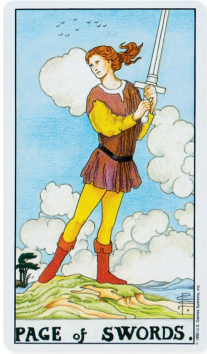
- Core Themes: Alertness, news, new ideas, communication, observation
- Symbols & Correspondences: Earth of the suit of Air; Gemini; Kabbalistic position: Kether (divine light)
- Upright Meaning:
- As an influence: Alert and observant; may bring news or warnings. Encourages asking questions and staying curious. May predict contracts, travel documents, or other agreements coming your way.
- As a person: Intelligent, charming, sociable young person. Quick-witted and good at communication. May be slightly mischievous or blunt. A good ally who can turn challenges into opportunities.
- As the “you” card: Rely on your intelligence; stay sharp and alert.
- Reversed Meaning: Gossip, deception, manipulation; unreliable information. As a person, may be a gossip who spreads misinformation. Be cautious about information received; check the reliability of your sources.
Knight of Swords
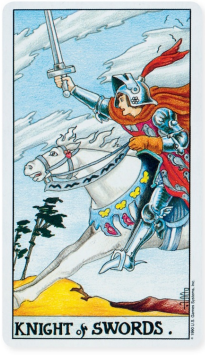
- Core Themes: Stress, truth, impulsiveness, directness, action
- Symbols & Correspondences: Fire of the suit of Air; Taurus and Gemini
- Upright Meaning:
- As an influence: Unpredictable, tempestuous times ahead – a roller coaster of highs and lows. Sudden truths may come to light, or underlying conflicts may be exposed. Common for work disputes, family tension, and romantic relationship conflicts.
- As a person: Determined and driven, with a strong sense of self and mission. May be quirky and entertaining. Incisive, forthright, and intelligent. May represent auditors, assessors, doctors, or lawyers.
- As the “you” card: Expect the unexpected; be ready for challenges.
- Reversed Meaning: Stressful situations blown out of proportion; lack of courage to take control. May be let down by someone you thought was reliable. Outwardly strong but inwardly hollow. Impulsiveness leads to poor decisions. Conflicts hard to resolve due to lack of honest communication.
Queen of Swords

- Core Themes: An incisive woman, independence, wisdom, clarity, truth
- Symbols & Correspondences: Water of the suit of Air; Virgo and Libra; Chakras: crown and third eye
- Upright Meaning:
- As a person: An astute strategist, single-minded and highly ambitious. Quickly assesses all aspects of a situation to find the truth. Adept at numbers – may be an administrator, IT specialist, researcher, or financial executive. Traditionally known as the “widow,” but generally means an independent woman or single parent. Does not suffer fools gladly.
- As the “you” card: Be determined and stand strong; use intellect rather than emotion to make decisions.
- As an influence: Offers wisdom, intelligence, perspective, and the ability to see the bigger picture. Shows strength in adversity when placed near negative cards.
- Reversed Meaning: Making excuses for bad behavior, or being unjustly attacked. May be an opponent or someone who has turned bitter and vengeful. May also be extreme stress causing unreasonable demands. Emotions overwhelm intellect, leading to poor judgment.
King of Swords

- Core Themes: Authority, intellect, truth, logic, fairness
- Symbols & Correspondences: Air of the suit of Air; Aries and Taurus; Chakras: solar plexus and crown
- Upright Meaning:
- As a person: An intellectual or a man who relies on logic to win. Open to ideas but impatient with delays. Outwardly calm with good judgment. Ideal vocations: doctor, judge, lawyer, military, law enforcement, academic, IT, manager, or director.
- As the “you” card: Take charge; use intellect and logic to guide decisions.
- As an influence: Focus on the mind rather than the heart. Intensive work or study period. In relationships and domestic affairs, it is time to take the initiative.
- Reversed Meaning: The usually balanced King becomes destructive. May be put under unreasonable pressure to produce results. No room for argument or personal interpretation. As a person, may play mind games and do almost anything to win. Abusive power, authoritarianism, manipulation. Need to examine whether authority is being misused.
References
Greer, M. K. (2019). Tarot for your self: A workbook for personal transformation (3rd ed.). Weiser Books.

