Throughout the long history of shamanic cultures, healers have relied not only on their own spiritual abilities but also on a range of tools crafted from natural materials to amplify energy, guide altered states of consciousness, cleanse the aura, and connect with the spirit world. These tools—drums, feathers, rattles, staffs, and wands—are not casually collected ornaments but carefully selected and consecrated energy vessels, each carrying specific spiritual meanings and functions. This article systematically introduces the energetic mechanisms of common shamanic tools and their practical applications in contemporary practice.

The Shamanic Drum: A Rhythmic Bridge to the Spirit World
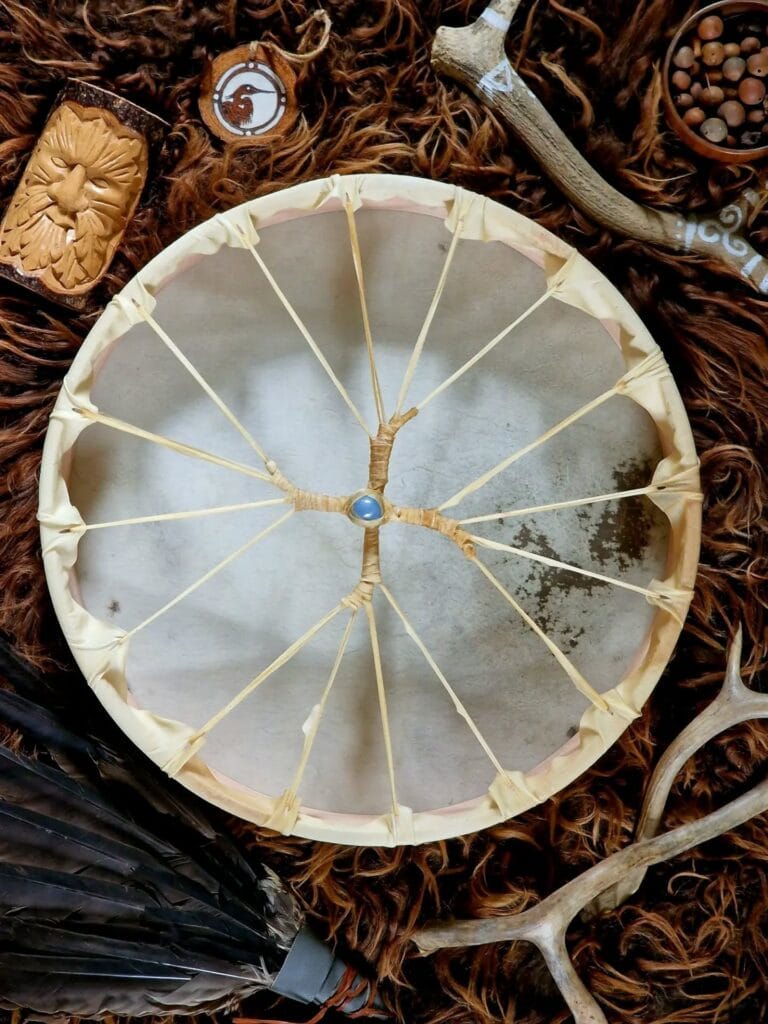
The shamanic drum holds the most central position among all shamanic tools. It is not merely a musical instrument but an energy bridge that facilitates the transition of consciousness into altered states. In traditional shamanic ceremonies, the drumbeat is used to simulate the rhythm of the heartbeat. This rhythm guides the brain into a specific frequency of consciousness—when the drum is struck at a steady, repetitive pace, the left and right hemispheres of the brain tend to synchronize, and brainwaves gradually transition from waking states into theta wave states. This is a state of deep relaxation, heightened focus, and increased receptivity to spiritual information.
From an energetic perspective, the vibrations of the drumbeat can penetrate physical barriers and directly affect the human energy field. It helps individuals break through the constraints of ordinary awareness and enter non-ordinary states, thereby accessing the guides and healing forces of the spirit world. This explains why the shamanic drum appears in virtually all shamanic cultures—regardless of geographic location or cultural background, the drum’s role as a tool for consciousness transformation remains universal.
The making of a shamanic drum itself carries rich spiritual significance. The drum frame is traditionally made of wood. This choice is not accidental—trees are regarded as energetic channels connecting heaven and earth, traversing the three realms, and thus the drum frame inherits this quality of being an energetic conduit. The drumhead is covered with animal hide, and each species of animal possesses unique energetic qualities: deer hide brings gentleness, heart-healing, and openness; goat hide brings grounding, stability, and the energy of reaching toward the highest heights; kangaroo hide brings the energy of letting go, moving forward, and releasing old attachments. When the drum is struck, the spirit and medicine of that particular animal are invoked and transmitted through the sound.
Feathers: Wind Element Purifiers of the Energy Field
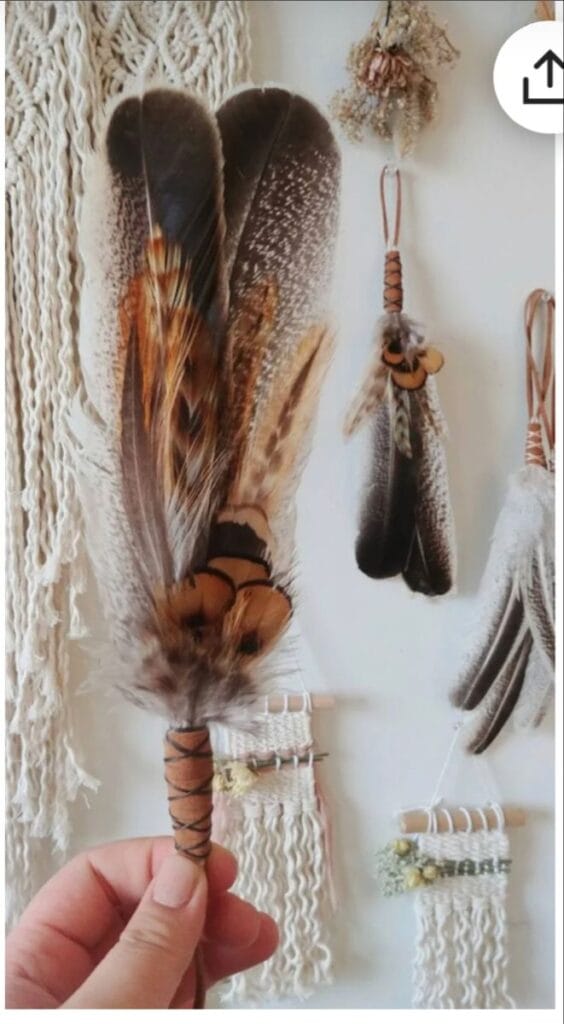
Feathers are among the lightest and most fluid of shamanic tools. They carry the energy of the Wind element—communication, cleansing, and the transmission of intentions and prayers to the spirit world. In shamanic practice, feathers are primarily used for two purposes: clearing the aura and guiding energy.
When a feather is gently swept around a person’s body, its fibrous structure interacts subtly with the energy field, lifting stagnant or negative energy from the aura and dispersing it. This process is not a physical “sweeping away” but rather an adjustment of the energy field’s balance through the feather’s own subtle vibrational frequency.
Different types of feathers also carry distinct energetic qualities. Eagle feathers are typically associated with father energy, the sky, and spiritual connection. Owl feathers are linked to wisdom, night vision, and inner knowledge. Crow feathers are connected to mystery, transformation, and spiritual depth. In practical use, shamans select feathers according to the specific intention of the healing being conducted.
Rattles: Sonic Tools for Spirit Invocation and Space Anchoring
Rattles, also known as shakers, are another widely used shamanic tool. Their core functions lie in summoning spiritual presences and anchoring sacred space. At the beginning of a ceremony, the continuous sound of the rattle sends a signal to the spirit world, inviting assisting spiritual forces to enter the space. At the conclusion of a ceremony, the rattle is used to clear the space, bid farewell to spiritual presences, and re-anchor energy back into ordinary reality.
The construction of a rattle is similarly rich in symbolic meaning. Traditional rattles are often made from animal hide, horn, or turtle shell, filled with small stones, grains, or seeds. Each component material carries specific spiritual connotations. When the rattle is shaken, it simultaneously invokes the spiritual energies of all its constituent parts, creating a composite healing vibration. This makes the rattle a highly personalized tool—each rattle reflects the spiritual intentions and personal energetic signatures of its maker or user.

Staffs and Wands: Physical Expressions of Spiritual Journey
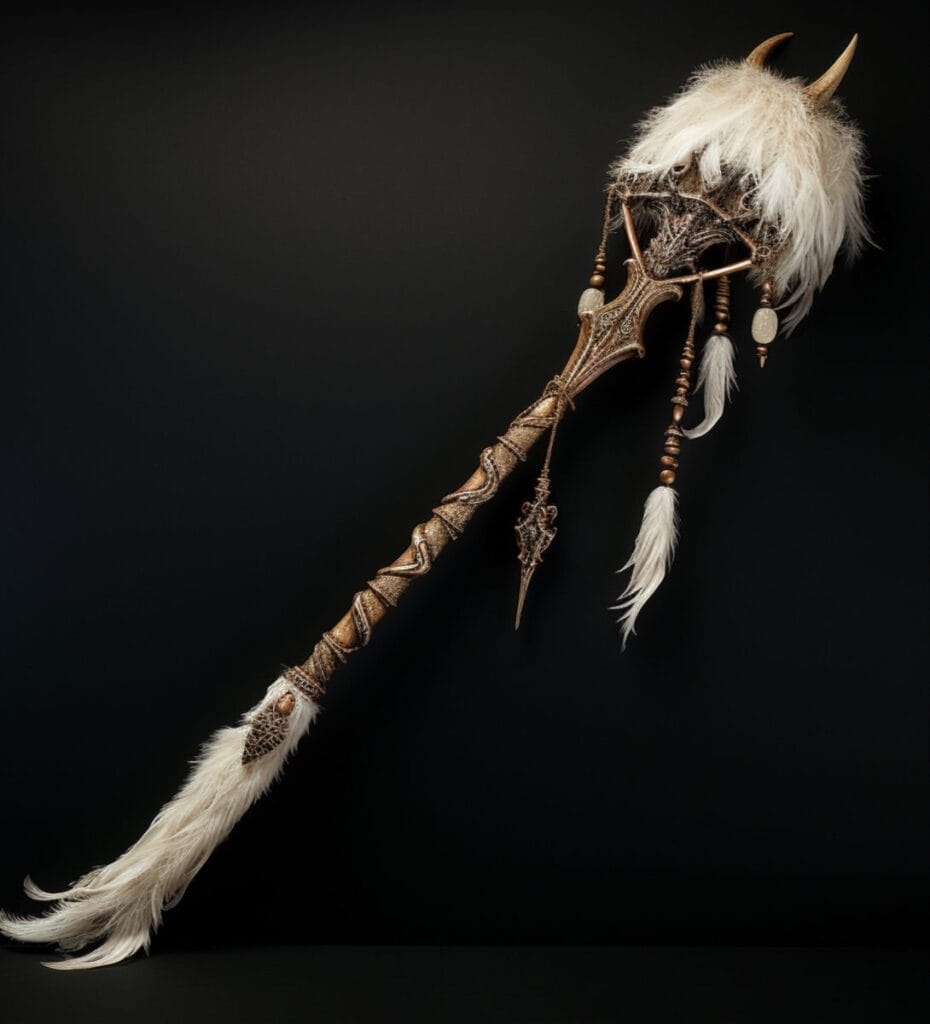
Staffs and wands in shamanic tradition symbolize the individual’s spiritual authority and journey. They are typically crafted from a specific piece of wood, to which various symbolic items are attached—such as feathers, crystals, animal fur, and seeds. Each attached item represents a particular awakening, teaching, or stage of growth on the individual’s spiritual path.
The function of a staff extends beyond mere symbolism. In practical use, staffs serve multiple purposes: marking and protecting sacred space, directing energy flow, summoning spiritual forces, and facilitating healing and cleansing. Because a staff is a physical embodiment of an individual’s spiritual journey, its energetic connection with its user is exceptionally deep, making it a highly personalized shamanic tool. Every shaman’s staff is unique—differing in materials, adornments, and energetic qualities—and cannot be replicated or copied.
The Inner Attitude Toward Tools: Connection, Not Possession
When discussing shamanic tools, one core principle deserves emphasis: the true power of these tools does not lie in their material form but in the depth of connection established between the user and the tool. A tool can only fulfill its healing potential when the user has fully understood it, respected it, and continuously cultivated a relationship with it. Ways to connect with tools include regularly cleansing and nurturing them, expressing intention and gratitude before use, and engaging in energetic exchanges with them during meditation.
Furthermore, tools should not be treated as collectibles for personal attachment. They are living energetic partners. Whether it is a drum, a feather, or a rattle, each tool possesses its own vitality and consciousness. The user’s responsibility lies in respecting the existence of this vitality and working with the tools in an attitude of gratitude and humility.
In this sense, shamanic tools are not magical objects. They are mediums that connect the individual with nature, inner self, and the spirit world. They help the user step out of the narrow confines of ordinary consciousness and enter a broader experience of life and spiritual connection. The true art of using these tools lies not in technique itself but in the presence, gratitude, and intention brought to every moment of their use.

References
- Charman, R. (2023). Crystal shamanism: Sacred earth medicine healings. Rockpool Publishing.
- Eliade, M. (2004). Shamanism: Archaic techniques of ecstasy. Princeton University Press.
- Halifax, J. (1982). Shaman: The wounded healer. Crossroad Publishing.

